
A Canadian work permit application is often the first major step for foreign workers who want to build a career, earn a competitive income, and potentially create a pathway toward permanent residency in Canada.
With labor shortages continuing across industries such as healthcare, construction, technology, transportation, agriculture, and skilled trades, Canada remains one of the most attractive destinations for international workers. However, obtaining a work permit is not as simple as receiving a job offer and boarding a plane.
Applicants must understand eligibility rules, document requirements, employer obligations, processing times, fees, and the different work permit categories available before applying.
This comprehensive guide explains the entire Canadian work permit application process in simple language so you can avoid common mistakes and improve your chances of approval.
What Is a Canadian Work Permit Application?
A Canadian work permit application is a formal request submitted to Immigration, Refugees and Citizenship Canada (IRCC) that allows a foreign national to legally work in Canada for a specific period.
A work permit is not the same as permanent residency.
Instead, it provides temporary authorization to work for a Canadian employer under approved conditions.
Depending on your circumstances, your permit may allow you to:
- Work for one employer only
- Work for multiple employers
- Work anywhere in Canada
- Gain Canadian work experience that may support future PR applications
Many successful immigrants first enter Canada through a work permit before transitioning to permanent residency through programs such as:
- Express Entry
- Provincial Nominee Programs (PNPs)
- Canadian Experience Class (CEC)
- Atlantic Immigration Program
- Rural Community Immigration pathways
Canadian Work Permit Application Types
Understanding the type of permit you need is critical because each category has different requirements.
Application for Employer-Specific Work Permits
An employer-specific work permit allows you to work for a particular employer under specific conditions.
The permit usually states:
- Employer name
- Job title
- Work location
- Duration of employment
Most employer-specific permits require a Labour Market Impact Assessment (LMIA).
An LMIA demonstrates that no qualified Canadian citizen or permanent resident is available to fill the role before a foreign worker is hired.
Common industries using LMIA-supported permits include:
- Truck driving
- Construction
- Agriculture
- Hospitality
- Manufacturing
- Healthcare
Application for Open Work Permits
An open work permit provides more flexibility. Workers can usually work for most Canadian employers without obtaining a new permit for each job.
Open work permits are often available to:
- Spouses of eligible workers
- Spouses of certain international students
- Post-graduation work permit holders
- Some permanent residency applicants
- Special humanitarian programs
Because open permits offer flexibility, they are among the most sought-after Canadian work authorization options.
Application Eligibility Requirements
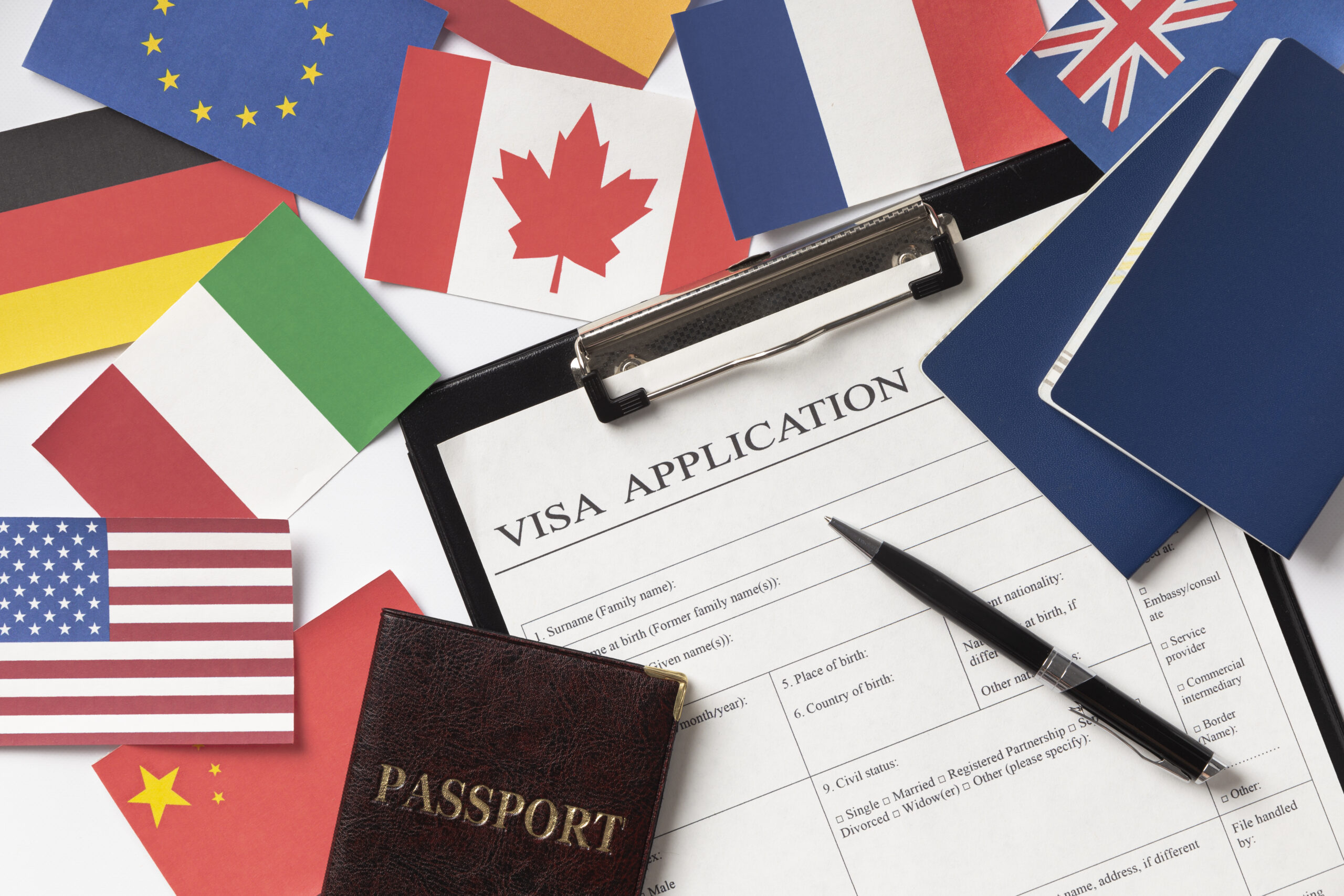
Every applicant must satisfy general eligibility requirements before approval.
Applicants typically must:
- Prove they will leave Canada when authorized stay ends
- Demonstrate sufficient funds
- Have no serious criminal history
- Meet medical requirements if applicable
- Show genuine intent to work legally
- Provide truthful information and documentation
In some cases, applicants may also need:
- Police certificates
- Medical examinations
- Biometrics
- Educational credential assessments
- Employment references
Failure to provide complete documentation remains one of the most common reasons for delays and refusals.
Application Documents Checklist
The exact documents vary depending on your work permit category.
However, most applicants need the following:
| Document | Required |
|---|---|
| Valid Passport | Yes |
| Job Offer Letter | Usually |
| LMIA (if required) | Often |
| Proof of Work Experience | Yes |
| Educational Credentials | Usually |
| Passport Photos | Yes |
| Medical Exam Results | Sometimes |
| Police Clearance Certificate | Sometimes |
| Biometrics | Often |
| Proof of Funds | Sometimes |
Before submission, ensure all documents:
- Are clear and readable
- Match information across forms
- Are translated if not in English or French
- Remain valid throughout processing
Canadian Work Permit Application Through LMIA
One of the most common routes involves obtaining a Labour Market Impact Assessment.
The LMIA process generally works like this:
Step 1: Employer Advertises Position
The employer must demonstrate efforts to recruit Canadians first.
Step 2: LMIA Submission
The employer submits an application to Employment and Social Development Canada (ESDC).
Step 3: Positive LMIA Issued
If approved, the employer receives a positive LMIA.
Step 4: Worker Applies
The foreign worker submits the Canadian work permit application using the approved LMIA and job offer.
This route remains popular because it creates opportunities in industries facing labor shortages.
Canadian Work Permit Application Without LMIA
Many applicants are surprised to learn that not all work permits require an LMIA.
Several LMIA-exempt pathways exist under Canada’s International Mobility Program.
Examples include:
- Intra-company transfers
- International trade agreements
- Significant benefit programs
- Post-Graduation Work Permits
- Certain spouse work permits
- Francophone mobility programs
These pathways can significantly reduce overall waiting times because applicants bypass the LMIA stage. Recent immigration guidance continues to recognize numerous LMIA-exempt categories under the International Mobility Program.
Application Processing Time
Processing time is one of the most frequently asked questions.
The answer depends on:
- Applicant’s country
- Work permit category
- Application completeness
- Security screening requirements
- Biometrics appointment availability
Recent estimates suggest:
| Work Permit Type | Typical Processing Time |
|---|---|
| Open Work Permit | 5–13 Weeks |
| LMIA-Based Permit | 7–19 Weeks |
| PGWP | 5–19 Weeks |
Actual timelines vary considerably and IRCC regularly updates processing estimates.
Applicants from countries requiring additional security checks may experience longer processing periods.
Canadian Work Permit Application Fees
Applicants should budget for several immigration-related expenses.
Typical costs may include:
- Work permit application fee
- Biometrics fee
- Medical examination fee
- Police certificate fee
- Document translation costs
- Educational assessments
- Travel expenses
Because government fees change periodically, applicants should verify the latest amounts directly through the official IRCC website before applying.
Online Application Process

Applying online is generally the fastest and most convenient option.
Create an IRCC Account
Register through the official immigration portal.
Gather Documents
Upload all required supporting documents.
Complete Application Forms
Answer every question accurately.
Pay Fees
Submit required payment online.
Provide Biometrics
Attend your biometrics appointment if requested.
Track Your Application
Monitor progress through your online account.
Online applications often move more efficiently than paper submissions because they avoid mailing and manual processing delays.
Canadian Work Permit Application for Nigerians
Canada remains a popular destination for skilled Nigerian workers.
Common sectors recruiting internationally include:
- Healthcare
- Truck driving
- Information technology
- Engineering
- Skilled trades
- Agriculture
Nigerian applicants should pay particular attention to:
- Police certificates
- Financial documentation
- Employment verification
- Educational records
- Biometrics scheduling
Incomplete documentation frequently leads to avoidable delays. Current guidance for Nigerians indicates processing times can vary significantly depending on the visa office and application complexity.
Application Success Tips
Applicants who receive approvals often share several common habits:
- Submit complete documentation
- Ensure job offers are genuine
- Avoid inconsistent information
- Include strong supporting evidence
- Double-check forms before submission
- Respond quickly to IRCC requests
One overlooked factor is ensuring your employer understands compliance requirements. Employers who regularly hire international workers typically navigate the process more efficiently.
Mistakes That Causes Refusals
One of the biggest misconceptions about the Canadian work permit application process is that having a job offer automatically guarantees approval.
In reality, immigration officers assess every application individually. Even highly qualified candidates can receive refusals if their documentation is incomplete or their application raises concerns.
Below are some of the most common reasons work permit applications are denied.
Incomplete Documentation
Missing documents remain among the leading causes of refusal.
Examples include:
- Missing employment letters
- Incomplete forms
- Expired passports
- Missing translations
- Missing LMIA documents
- Missing proof of qualifications
Before submitting your application, review every uploaded file carefully.
Insufficient Proof of Qualifications
Applicants must demonstrate they can perform the job being offered.
Immigration officers often expect:
- Academic certificates
- Professional licenses
- Industry certifications
- Previous employment records
- Training documentation
A mismatch between the job offer and your qualifications can create concerns about your eligibility.
Concerns About Temporary Intent
A work permit is considered a temporary immigration document.
Officers may refuse applications if they believe the applicant intends to remain in Canada beyond authorized conditions without a legal pathway.
Strong supporting evidence can help demonstrate genuine compliance with immigration requirements.
Questionable Job Offers
IRCC closely reviews employment offers.
Warning signs include:
- Unverified employers
- Unrealistic salaries
- Missing company information
- Suspicious recruitment practices
- Inconsistent employment details
Applicants should always verify employer legitimacy before accepting any offer.
Inaccurate Information
Even small discrepancies can create problems.
Examples include:
- Different employment dates
- Conflicting education records
- Incorrect travel history
- Inconsistent family information
Accuracy matters throughout the Canadian work permit application process.
Canadian Work Permit Application High-Demand Jobs in 2026
Canada continues to face labor shortages across several industries.
This creates opportunities for qualified international workers who possess in-demand skills.
Healthcare Jobs
Healthcare remains one of Canada’s fastest-growing sectors.
Popular occupations include:
- Registered nurses
- Licensed practical nurses
- Personal support workers
- Medical laboratory technicians
- Physicians
- Healthcare aides
Many provinces actively recruit healthcare professionals internationally.
Technology Jobs
Canada’s technology sector continues expanding rapidly.
In-demand positions include:
- Software developers
- Cybersecurity specialists
- Cloud engineers
- Data analysts
- Artificial intelligence specialists
- DevOps engineers
Major technology hubs include:
- Toronto
- Vancouver
- Calgary
- Montreal
Skilled Trades
Trades remain among the strongest pathways for foreign workers.
Examples include:
- Electricians
- Welders
- Plumbers
- Carpenters
- HVAC technicians
- Heavy equipment operators
Many trade occupations offer direct pathways toward permanent residency.
Transportation and Logistics
Canada’s transportation industry continues facing labor shortages.
Popular roles include:
- Truck drivers
- Dispatch coordinators
- Fleet managers
- Logistics specialists
Truck driving remains one of the most common occupations supported through LMIA programs.
Construction Industry
Rapid infrastructure development has increased demand for:
- Construction laborers
- Site supervisors
- Project coordinators
- Civil engineers
- Concrete finishers
Many provinces continue prioritizing construction workers through immigration streams.
Canadian Work Permit Application Salary Expectations
Salary expectations vary significantly based on occupation, location, education, and experience.
The following table provides general estimates.
| Occupation | Average Annual Salary (CAD) |
|---|---|
| Registered Nurse | $70,000–$110,000 |
| Software Developer | $80,000–$140,000 |
| Electrician | $65,000–$110,000 |
| Truck Driver | $55,000–$95,000 |
| Construction Supervisor | $70,000–$120,000 |
| Data Analyst | $75,000–$120,000 |
| Welder | $55,000–$90,000 |
Actual earnings may vary depending on province and employer.
Application by Province
Each province offers unique opportunities for foreign workers.
Understanding regional demand can improve your chances of securing employment.
Ontario
Ontario remains Canada’s largest labor market.
Major industries include:
- Technology
- Finance
- Healthcare
- Construction
- Logistics
Cities such as Ottawa and Toronto attract thousands of international workers annually.
Alberta
Alberta continues to recruit workers in:
- Energy
- Construction
- Transportation
- Skilled trades
Strong wages make Alberta attractive to foreign workers.
British Columbia
British Columbia offers opportunities in:
- Technology
- Tourism
- Healthcare
- Construction
The province consistently ranks among Canada’s most popular destinations for newcomers.
Saskatchewan
Saskatchewan frequently experiences labor shortages in:
- Agriculture
- Manufacturing
- Transportation
- Skilled trades
Many Provincial Nominee Program streams target workers in these sectors.
Atlantic Canada
Atlantic provinces continue attracting international workers through specialized immigration programs.
Popular industries include:
- Healthcare
- Seafood processing
- Hospitality
- Transportation
Application Pathways to Permanent Residency
Many foreign workers ultimately want permanent residency.
Fortunately, Canadian work experience often improves immigration opportunities.
Express Entry
Express Entry remains one of Canada’s most popular immigration systems.
Canadian work experience can significantly increase Comprehensive Ranking System (CRS) scores.
Benefits include:
- Faster processing
- Additional work experience points
- Better employer recognition
Canadian Experience Class
The Canadian Experience Class specifically rewards applicants who have gained skilled Canadian work experience.
For many workers, this becomes the most direct route toward permanent residency.
Provincial Nominee Programs
Many provinces operate immigration streams targeting workers with local employment experience.
Provincial nominations can dramatically increase permanent residency chances.
Popular programs include:
- Ontario Immigrant Nominee Program
- Alberta Advantage Immigration Program
- Saskatchewan Immigrant Nominee Program
- British Columbia Provincial Nominee Program
Atlantic Immigration Program
Workers employed in designated Atlantic employers may qualify for permanent residence through the Atlantic Immigration Program.
This pathway has become increasingly popular because of labor shortages across Atlantic Canada.
Canadian Work Permit Application for International Students
International students represent one of Canada’s largest talent pipelines.
After graduation, eligible students may qualify for a Post-Graduation Work Permit (PGWP).
Advantages include:
- Open work authorization
- Canadian work experience
- Strong PR opportunities
- Employer flexibility
Many successful immigrants begin their journey through the student-to-worker pathway.
Application Processing Delays: How to Avoid Them
Processing delays can occur for many reasons.
Applicants can reduce risk by:
- Applying early
- Providing complete documentation
- Uploading clear scans
- Monitoring IRCC messages
- Scheduling biometrics quickly
- Responding promptly to requests
Simple preparation often saves weeks or months of waiting time.
Application Timeline: From Job Offer to Arrival
One of the most important aspects of a successful Canadian work permit application is understanding the timeline involved. While every case is unique, most applicants move through a similar process.
| Stage | Estimated Time |
|---|---|
| Job Search & Offer | 1–6 Months |
| LMIA Processing (if required) | 1–4 Months |
| Work Permit Submission | 1 Day |
| Biometrics Appointment | 1–4 Weeks |
| Application Processing | 5–20 Weeks |
| Passport Request (if applicable) | 1–4 Weeks |
| Travel Preparation | 1–8 Weeks |
Applicants who prepare documents in advance often move through the process faster than those scrambling to gather paperwork after receiving a job offer.
Application Approval Checklist
Before clicking “Submit,” use this checklist to reduce the risk of delays or refusal.
Personal Documents
- Valid passport
- Passport-sized photographs
- Birth certificate (if requested)
- Marriage certificate (if applicable)
- Police certificates
- Medical examination results (if required)
Employment Documents
- Job offer letter
- Employment contract
- LMIA approval (if applicable)
- Employer contact information
- Job description
Qualification Documents
- Educational certificates
- Professional licenses
- Employment reference letters
- Training certifications
- Updated resume or CV
Application Review
- Forms completed accurately
- No missing signatures
- Consistent dates
- Correct employment history
- Correct travel history
- Correct family information
Advanced Approval Strategies
Applicants competing in today’s global labor market should think strategically.
The following approaches can improve opportunities.
Target Labor Shortage Occupations
Focus on sectors actively recruiting international talent.
Examples include:
- Healthcare
- Skilled trades
- Transportation
- Agriculture
- Technology
- Manufacturing
These industries often have employers familiar with hiring foreign workers.
Strengthen Your Resume
Canadian employers typically prefer concise resumes that highlight:
- Relevant experience
- Certifications
- Achievements
- Technical skills
- Language proficiency
Tailor your resume for each position.
Improve English or French Skills
Language proficiency can improve:
- Employment opportunities
- Workplace performance
- Immigration prospects
- Permanent residency options
Strong communication skills remain highly valued by employers.
Research Employers Carefully
Before accepting an offer:
- Verify company legitimacy
- Review company history
- Confirm recruitment processes
- Request written documentation
- Avoid suspicious payment requests
Legitimate Canadian employers do not sell jobs.
Plan Beyond the Work Permit
Successful applicants often think beyond temporary employment.
Consider:
- Permanent residency pathways
- Provincial opportunities
- Career progression
- Credential recognition
- Long-term settlement goals
This approach can help maximize the value of your Canadian work experience.
FAQs-Frequently Asked Questions
1. What is a Canadian work permit application?
A Canadian work permit application is a request submitted to Immigration, Refugees and Citizenship Canada (IRCC) seeking authorization to work legally in Canada for a specified period.
2. How long does a Canadian work permit application take?
Processing times vary depending on the work permit type, applicant location, and application volume. Many applications are processed within several weeks, while some may take several months.
3. Can I apply for a Canadian work permit without a job offer?
Some work permits require a job offer, while others—such as certain open work permits—may not.
4. Is an LMIA always required?
No.
Several categories of work permits are LMIA-exempt.
5. How much does a Canadian work permit application cost?
Costs vary depending on permit type, biometrics requirements, medical exams, and other supporting expenses.
6. Can my spouse work in Canada?
Depending on your immigration category, your spouse may qualify for an open work permit.
7. Can a work permit lead to permanent residency?
Yes.
Canadian work experience often strengthens eligibility for permanent residency programs.
8. Can I switch employers after receiving a work permit?
It depends on the permit type.
Open work permit holders generally have greater flexibility than employer-specific permit holders.
9. Do I need a medical examination?
Certain occupations and countries of residence may require a medical examination.
10. Can I bring my children to Canada?
Many temporary foreign workers can include dependent children in their immigration plans.
11. What happens if my application is refused?
Applicants may reapply if they address the concerns identified in the refusal decision.
12. What is the easiest Canadian work permit pathway?
There is no universally easiest pathway. The best option depends on your qualifications, work experience, occupation, and immigration goals.
Final Thoughts
A successful Canadian work permit application begins long before you submit your forms. Preparation matters.
Applicants who understand eligibility requirements, gather strong documentation, target labor-shortage occupations, and verify employer legitimacy place themselves in a stronger position for approval.
The Canadian labor market continues to offer opportunities across healthcare, technology, skilled trades, transportation, agriculture, and manufacturing. For many workers, a temporary work permit becomes the first step toward a long-term future in Canada.
Whether your goal is gaining international work experience, increasing your earning potential, supporting your family, or pursuing permanent residency, taking the time to understand the process can significantly improve your chances of success.
The journey may require patience and planning, but for thousands of workers every year, Canada’s work permit system opens the door to new opportunities, career growth, and a brighter future.